Teaching Dogs to Assist with Household Chores
Have you ever looked at your dog and thought, “wouldn’t it be great if they pitched in around here?” You’re not alone. Alongside their companionship and loyalty, dogs can absolutely be trained to help out around the house.
Training your dog to handle small chores at home — fetching the newspaper, gathering laundry, or even closing doors — helps you, sure, but it also keeps your dog mentally stimulated in a genuinely meaningful way.
Why Shouldn’t Dogs Have a Job Too?
Training your dog to assist with chores isn’t just about getting extra help around the house — it’s a great way to stimulate their mind and body at the same time.
Giving your dog small jobs around the house can reduce boredom, cut down on destructive behavior, and strengthen your relationship. And it’s a genuine crowd-pleaser when your dog fetches the TV remote right on cue in front of guests.
Fun Chores Your Dog Can Learn
Dogs can be trained to handle a surprising range of basic tasks around the home:
- Fetching items: shoes, the remote, the mail, or anything else with a consistent spot.
- Closing doors: nudging a door shut with a nose or paw on command.
- Putting toys away: dropping toys into a basket once playtime is over.
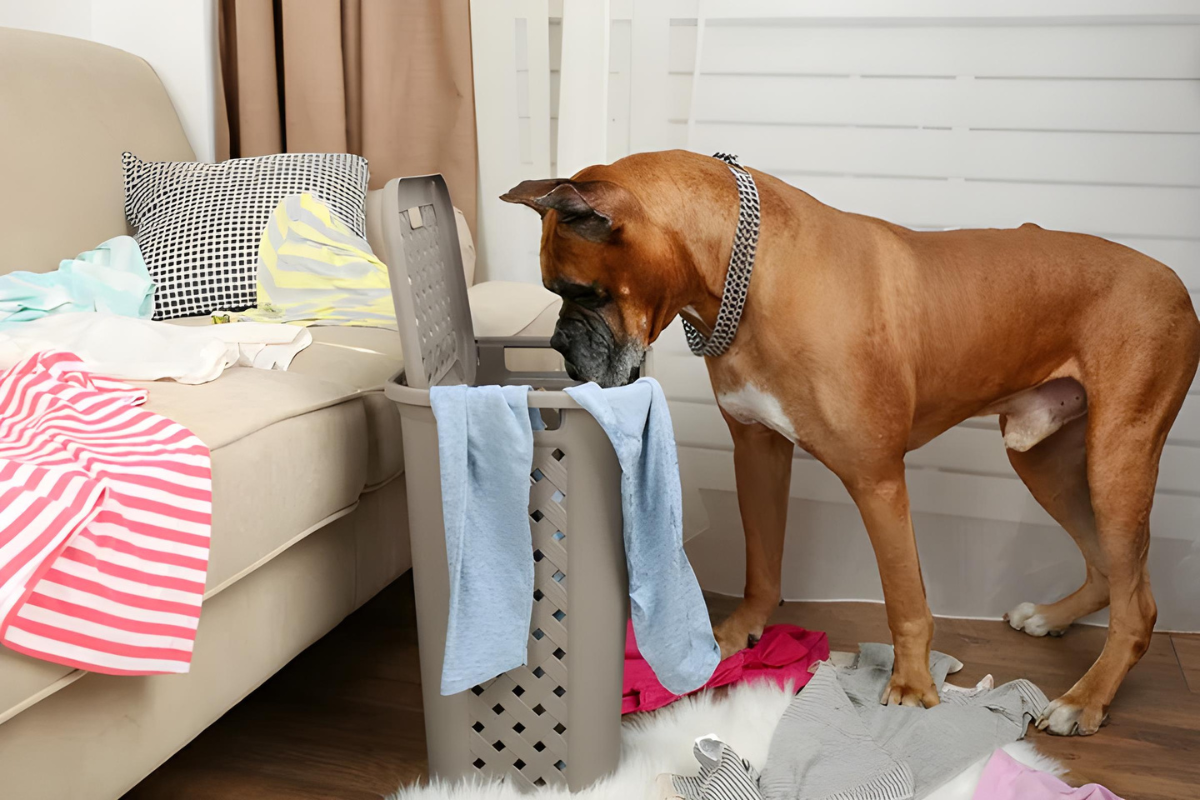
- Helping with laundry: many dogs can learn to carry small items or drop them into a basket.
- Turning lights on and off: with the right setup, some dogs can learn to hit a switch on command.
Step-by-Step: Turning Your Dog Into a Fetch Expert
Before tackling more complex chores, build a foundation of basic commands. “Sit,” “stay,” “fetch,” and “drop” are the essential building blocks everything else relies on.
- Choose the right task. Start simple, like fetching a single familiar item.
- Break it down. Split the task into small steps — teach them to pick up an item before expecting them to bring it all the way to you.
- Use positive reinforcement. Reward every success with treats, praise, or play. Keep it fun, not a chore for the dog either.
- Be patient. Training takes time. Celebrate the small wins along the way.
Teaching Your Dog to Fetch Household Items
Start with items your dog already enjoys, like toys, before progressing to household objects like the remote or slippers.
TIP: Keep training sessions short and gradually raise the difficulty by introducing new items one at a time.
Close the Door Behind You, Fido
Teaching a dog to close doors isn’t as tricky as it sounds:
- Place a treat or favorite toy near the door to draw your dog close.
- Attach a sticky note or small towel to the door at your dog’s nose height.
- Say “push” while guiding their nose or paw toward it.
- Reward the instant the door moves, even slightly.
Repeat consistently, rewarding every successful push, and the behavior solidifies quickly.
Tidy Up, Buddy: Teach Your Dog to Put Toys Away
Picking up after your dog’s playtime gets old fast — so train them to do it themselves. Using a basket or box, encourage your dog to drop toys into it on command:
- Start by reinforcing the “fetch” and “drop” commands with their toys.
- Place a basket somewhere accessible and say “put away” as they drop the toy in.
- Offer plenty of praise or treats when they get it right.
Laundry Helper, Lights On, Lights Off
Once your dog has the basics down, you can move on to more advanced chores that take extra patience and smaller incremental steps.
Laundry: ask your dog to fetch a towel or sock, then guide them to a laundry basket and reward when they drop the item in. With practice, some dogs can learn to carry items to a low-set washer.
Lights on and off: this one needs a light switch attachment made for dogs. Show your dog how to hit the switch, pair it with a command like “light off” or “light on,” and reward success.
Consistency: The Secret Ingredient to a Helpful Pup
Consistency is what actually makes this stick. Regular practice, patience, and positive reinforcement are the real building blocks here — keep sessions short and fun, and adjust based on your dog’s energy and interest on any given day.
Picking the Right Chores for Your Dog
Not every dog will be suited to every task. A few things worth considering:
- Size: larger dogs often handle closing doors or carrying laundry more easily, while smaller dogs may excel at fetching small items.
- Temperament: high-energy dogs may enjoy more physically involved chores, while calmer dogs might prefer simpler tasks like putting toys away.
- Health and age: keep tasks appropriate for your dog’s age and physical condition. Chores should stay fun, never strenuous or overwhelming — skip repetitive carrying or jumping tasks for puppies, senior dogs, or dogs with joint issues.
Frequently Asked Questions
What age should I start teaching my dog chores?
Most dogs can start learning basic fetch-and-drop skills as early as 4-6 months old, once they’ve got a handle on sit, stay, and basic focus. Save more physically demanding tasks, like carrying items to a washer, until they’re fully grown.
Can any breed learn to help with chores?
Most dogs can learn at least a few simple tasks like fetching or putting toys away, regardless of breed. Retrievers and working breeds often pick up fetch-based chores especially fast thanks to their breeding, but patience and consistency matter more than breed for most household tasks.
Is it safe to have my dog help with laundry or carrying items?
Yes, as long as the items are light and appropriately sized for your dog, and the task doesn’t involve awkward angles, stairs, or excessive weight. When in doubt, keep it to soft, light items like a single towel or sock.
My dog loses interest halfway through training a chore. What am I doing wrong?
Usually this means the steps are too big or the sessions are running too long. Break the task into smaller pieces, keep sessions to 5-10 minutes, and end on a success rather than pushing through a frustrated moment.
A Dog That Helps Around the House? You Bet.
Teaching your dog to assist with household chores is genuinely rewarding for both of you. Beyond the practical help, it provides real mental and physical stimulation, strengthens your bond, and shows off just how capable your dog actually is. Start small, stay patient, and before long you’ll have a helpful assistant who makes your day a little easier, one task at a time.
Looking for more training ideas? Visit our dog behavior and training page for more guides like this one.