Stop Fear Barking
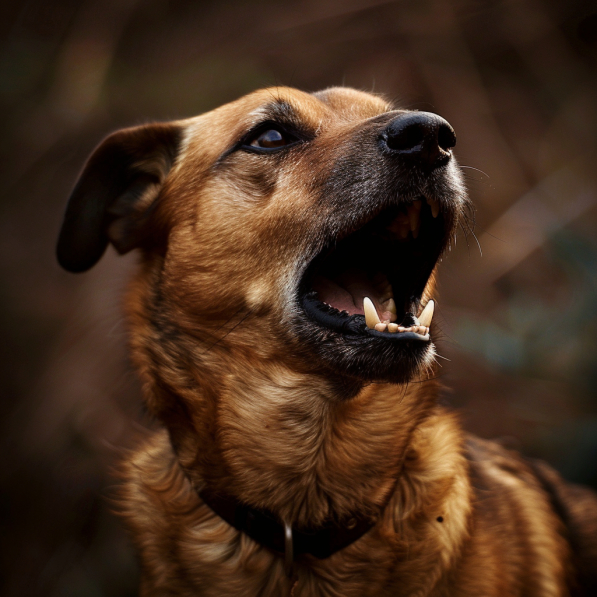
Working with a fearful dog takes patience, and there’s no single black-and-white fix for fear barking. This guide covers why dogs develop it, the most common triggers, a step-by-step way to work through it, and when it’s time to bring in a professional.
Working With Fearful Dogs to Stop Fear Barking
When working to stop fear barking with a fearful dog, or however your dog acts out when afraid, it’s never a black and white fix. You’ll first need to understand a few things about fear in dogs, so bear with me as I go over this quickly as a prelude to the actual training tips. Or just scroll down and get right to the good stuff.
Fear in Puppies
With puppies, there is typically a fear stage that is part of overall mental development for every dog. The Fear Impact Stage, as it’s known, can happen anywhere from 7 to 11 weeks of age. If you’ve just brought home a new puppy, it’s extremely important not to frighten, scare, or startle them in a traumatic way during this period. Subjecting a puppy to traumatic experiences during this stage can often result in a fearful adult dog.
You may notice fearful reactions like your pup jumping back from a blowing leaf, or cowering at a sudden sound like the end-cycle alarm on your washing machine. That’s normal, not traumatic — it’s just a sign your pup is going through the fear impact stage. Minimize truly stressful situations during this window, since adverse conditioning at this stage can stick. Start socializing with other people and dogs now, supervising visits to keep them playful and fun rather than stressful.
TIP: Dog daycare offers great socialization opportunity at this stage if it’s within your budget. Through early supervised socialization, your pup will grow its courage as it moves through to the next stage of development.
Fear in Adult Dogs
Fear in adult dogs is often collateral damage from a lack of puppy socialization, a traumatic or stressful event, or something left over from the fear stage above. Most dogs will never tell you outright, but almost all of them are afraid of something — it’s just not until a dog acts out that we notice there’s a problem.
It’s not until we witness cowering, submissive peeing, or fear barking that we realize our dog is afraid. A little cowering now and then doesn’t seem like a big deal — until normal day-to-day things start to trigger real fear. Ever take a fearful dog to the dog park and watch the pack’s reaction? Chances are the fearful dog got mobbed and either cowered, peed submissively, rolled onto its back, froze stiff with its tail tucked, or let out a fearful bark.
Common Fear Barking Triggers
Fear barking usually isn’t random — it’s tied to a specific trigger or category of triggers. Identifying which one(s) apply to your dog makes the training below far more effective:
- Loud, sudden noises — thunderstorms, fireworks, vacuum cleaners, the doorbell, motorcycles.
- Strangers or visitors — especially people wearing hats, sunglasses, uniforms, or moving unpredictably (joggers, skateboarders, kids on bikes).
- Other dogs — particularly larger or more assertive dogs, or dogs encountered on-leash where your dog can’t create distance.
- Car rides and vet visits — often built from a single bad early experience (a rough ride, a painful procedure).
- Being left alone — which can overlap with separation anxiety rather than pure fear, so watch for destructive behavior alongside the barking.
- Confined or cornered situations — crates, small rooms, or fence lines where your dog feels it can’t retreat.
Typical Response to Fear
There are a few common reactions from a dog that’s scared:
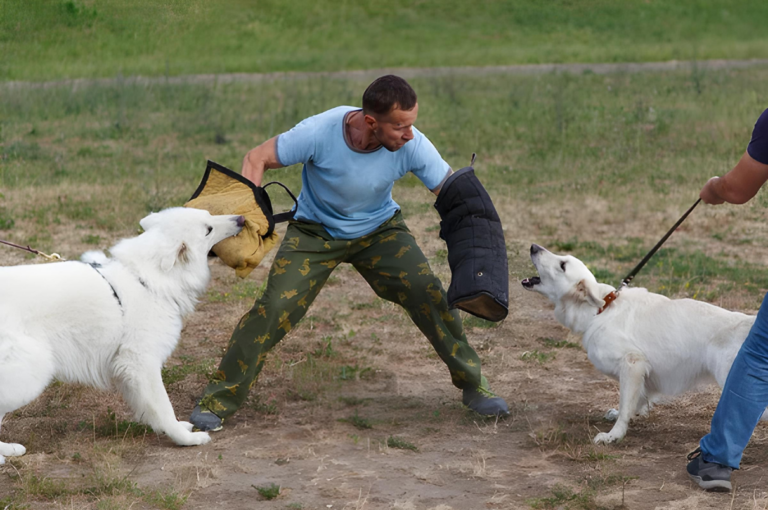
- Fight: Your dog may start with fear barking that escalates to aggressive barking and snapping, which can end in a dog fight. Someone’s getting bit.
- Flight: Your dog may try to flee, with the other dog or pack chasing it. This also often ends up with a dog getting bit or snapped at — I’ve even seen owners get bit trying to reach in and protect their dog. Sadly, this is very common.
- Cower or freeze: Your dog may cower or freeze, allowing sniffing and pushing by the pack (usually the most dominant few dogs). This is typically the best-case scenario, since as long as the dog holds still for a minute or two, the pack usually breaks up and moves on.
Most dogs would rather avoid a fight, so flight is the instinctive first choice for a scared dog. But if cornered with no way to retreat, the fight instinct takes over. Fear barking in this situation is a warning that a fight is imminent. If the other dog or pack backs off, your dog learns that barking works — it keeps them safe. Without meaning to, your dog has just conditioned itself to be a fear barker.
Techniques to Stop Fear Barking
As with most barking problems, focus between dog and handler is extremely important here. Focus lets you distract your dog from the cause of the fear, then redirect, praise, and reward them. Redirection keeps the mind occupied until the dog eventually stops fixating on the fear.
Reliable communication between dog and handler matters enormously when dealing with fear barking. Without it, you have little chance of reconditioning your dog to ignore the trigger. If you haven’t already, it’s worth reading up on dog obedience training and clicker training first — both establish the communication foundation the tips below rely on.
Step-by-Step: Training Tips to Stop Fear Barking
TIP: Regardless of what type of fear is affecting your dog, the core method stays the same: calm your dog using distraction and focus, then desensitize and countercondition the fear into something pleasant. Don’t use coercive or aversive training methods with a fearful dog — they tend to reinforce the skittish behavior instead of fixing it.
- Don’t force exposure. Don’t force your dog to interact with something it’s afraid of. You’ll reintroduce that stimulus later, on your terms, once your dog is ready — for now, avoid it.
- Desensitize at a distance. Calmly and slowly work your dog near the object or trigger that scares them, staying far enough away that they merely notice it without reacting fearfully. Go as slow as needed — this step is the foundation for everything after it.
- Close the distance gradually. Repeat the exercise over and over, moving a little closer each time. The goal is to make the trigger feel completely ordinary, like nothing worth worrying about.
- Countercondition with high-value rewards. Whenever the scary sound, person, or object shows up, praise and reward your dog immediately with the best treat in your arsenal — a piece of chicken or bacon, something they genuinely can’t resist. This “rewires” how their brain associates the trigger: once they learn that the best reward of their life happens right when the scary thing appears, they start anticipating the treat instead of the fear.
- Praise through the fear. It can feel counterintuitive — and yes, people may look at you strangely for praising a barking dog in public — but a calm, confident, upbeat tone during a fearful moment reinforces a feeling of security that can snap your dog out of a fearful state.
- Use click-and-reward. With a clicker, simply mark a calm state of mind with a click, then reward immediately. Do this both before and after a fearful episode. Over time your dog focuses more on earning the click and treat, and less on whatever used to scare them.
When to Bring in a Professional
Most fear barking responds well to the desensitization and counterconditioning approach above, but it’s worth getting outside help if you notice any of the following: the fear is getting worse despite consistent training, your dog has bitten or nearly bitten someone out of fear, the fear barking is paired with shaking, hiding, drooling, or panting so severe it looks like a panic response, or the trigger is something you can’t control or gradually introduce (like thunderstorms). A certified professional dog trainer or veterinary behaviorist can build a structured desensitization plan matched to your dog, and in more severe cases a vet can discuss whether an anti-anxiety medication makes sense alongside training — it’s never a replacement for training, but it can take the edge off enough that training actually sticks.
Frequently Asked Questions
Is fear barking the same as aggressive barking?
Not quite, though they can look similar and even escalate into each other. Fear barking starts as a warning meant to create distance or stop something scary from getting closer. Aggressive barking is more about controlling or driving something away. In practice, a fear barker that isn’t given space to retreat can absolutely escalate into fear-based aggression, which is why respecting your dog’s distance during training matters so much.
Should I comfort my dog when it’s fear barking?
Calm, matter-of-fact reassurance is fine and won’t “reinforce” fear the way people sometimes worry it will — fear is an emotion, not a trained behavior, so you can’t accidentally train more of it by being kind. What you want to avoid is frantic, anxious energy from you, which your dog will pick up on and mirror.
How long does it take to stop fear barking?
It varies widely depending on the dog, the trigger, and how long the pattern has been reinforced, but most owners see a meaningful reduction within 4-8 weeks of consistent daily counterconditioning. Deeply ingrained fears (especially around specific past trauma) can take several months of patient work.
Can fear barking go away on its own?
Rarely, and it often gets worse without intervention, since every successful bark-and-retreat teaches your dog that barking works. The earlier you start structured counterconditioning, the faster and more completely it resolves.
Stop Fear Barking Summary
All puppies go through a fear period known as the fear impact stage. Fearful adult dogs have usually suffered a traumatic event during that stage, or missed out on early socialization. To stop fear barking, first identify its trigger.
Never force your dog to face its fear head-on (a method known as “flooding”) — it can backfire badly. Positive training to desensitize and countercondition is the method of choice for fear. Clicker training pairs well with this approach, and you can find more detail on our dog behavior training page and across the rest of the site.
Be calm, compassionate, and patient with your fearful dog. Baby steps work best — stay the course and don’t give up.