Excited Dog Barking
Does your dog’s excited barking and spinning ruin your daily routine every time someone comes to the door? Here are some proven, real-world tips to put an end to it.
How to Stop Excited Dog Barking
Think about it — do wild canines bark like this? Ever hear of a wolf, dingo, or coyote losing it for no reason the way a pet dog does? Probably not. Wild canines may bark a bit as pups establishing pack hierarchy, but barking within a pack can actually draw predators or scare off prey, so it’s selected against. This is a good example of how domestication has reshaped behavior in pet dogs in a genuinely quirky way.
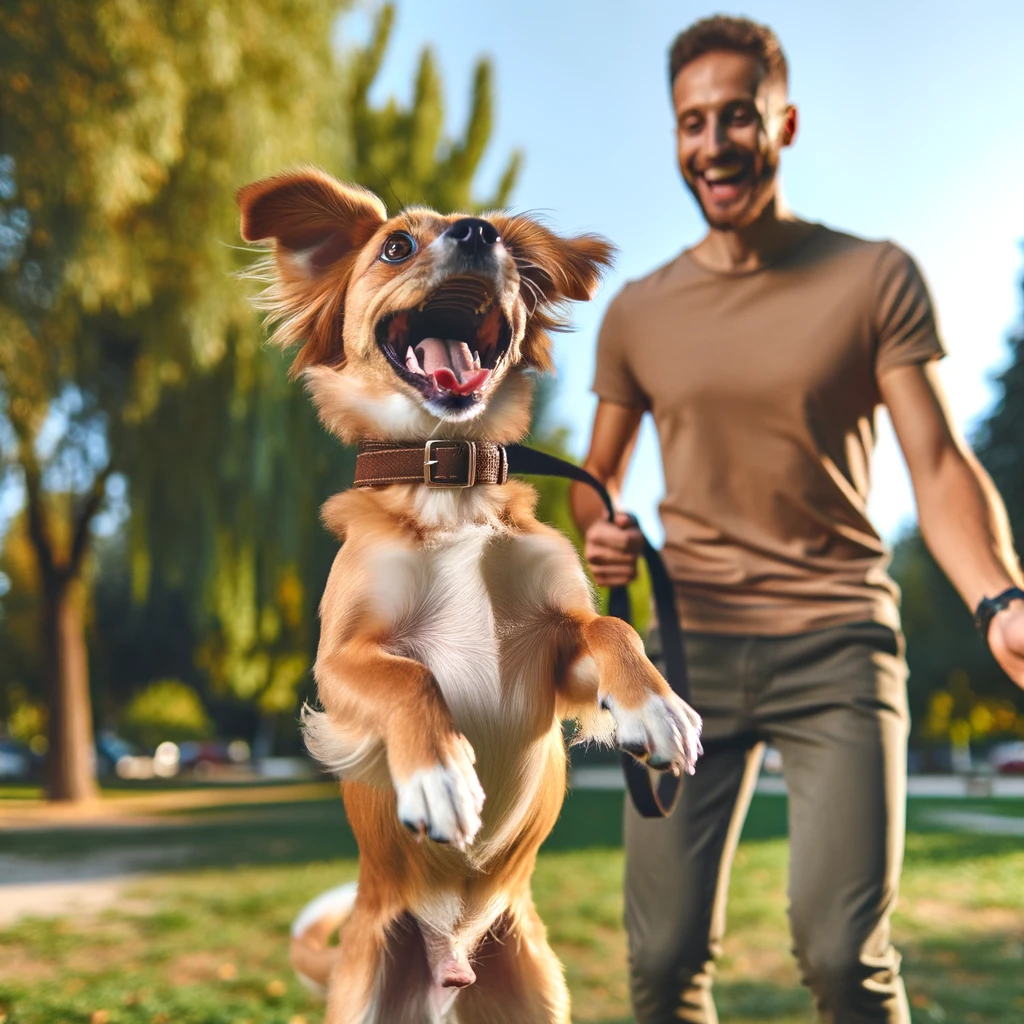
To be clear, barking is a legitimate form of canine communication, right alongside whining, whimpering, growling, and howling. Over time, our dogs have learned to vocalize with us in all sorts of ways, so it would be wrong to say barking itself is a problem. What we’re talking about here is the dog that loses its mind with excitement — barking, spinning, and generally losing focus the second something exciting happens.
The Neighbor’s Shih Tzu
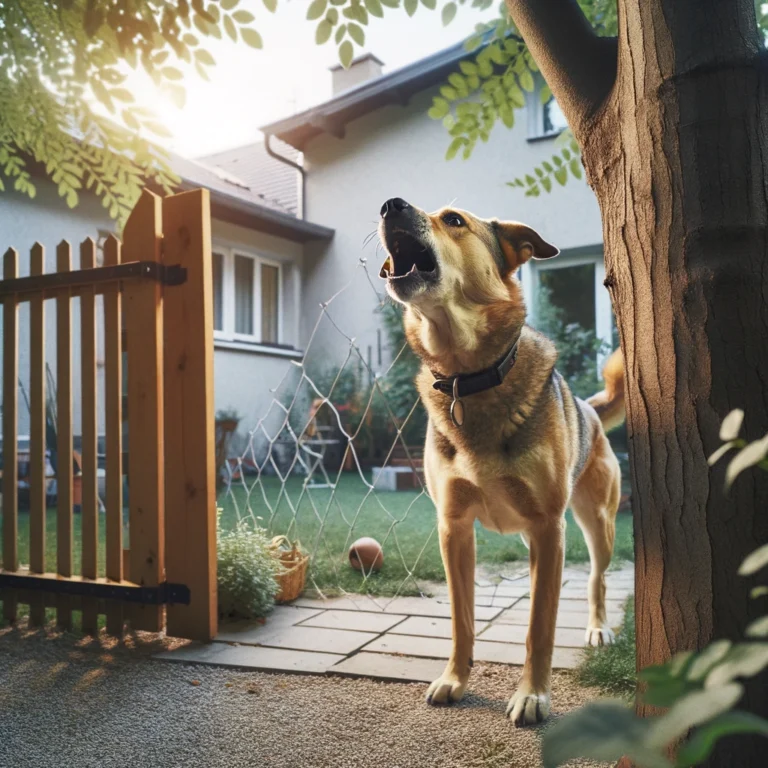
Picture the neighbor’s Shih Tzu, confined to the yard by an invisible fence. The UPS driver shows up with a package, and the dog starts barking, spinning, and running back and forth along the fence line. This isn’t aggressive or guarding-type barking — the body language makes that clear. It’s pure excitement. So the owner comes out and starts yelling, “quiet down!”, “shut up!”, getting louder each time.
But the dog keeps barking. Why? Most dogs feed off their humans’ energy. The owner is yelling and worked up, so the dog matches that energy and gets even more excited. The real problem is that the owner doesn’t realize their own excited, raised-voice reaction is reinforcing the dog’s excited state rather than calming it.
TIP: Daily exercise and simple training activities go a long way toward mellowing an over-excited dog. Something as simple as interactive play can be the exact thing that breaks the excited-barking cycle. Worth trying before anything more involved.
Situations like this often escalate — something gets thrown at the dog, or the dog gets chased off and yelled at more. Let’s put an end to that communication breakdown. As far as your dog knows, short, loud commands like “stop,” “quiet,” “no,” or “shut up” sound exactly like a barking contest. So yelling commands doesn’t just fail to work — it actively reinforces the behavior.
The real fix, and you’ll see this echoed elsewhere on our site, is redirection and focus. Instead of barking back at a barking dog, pull their attention away from the exciting trigger and redirect their mind with a calm command. Some owners have success with quiet eye contact alone and no verbal command at all, especially once you’ve built real trust and leadership with your dog. Others prefer a command paired with a leash cue. Either way, the goal is the same: shift focus back to you before the excitement peaks.
Excited Barking Training Exercise
You’ll need to catch your dog just before it reaches full excitement in order to actually change the pattern — once a dog is already at full excited-bark, redirecting is much harder. This is easiest to practice with a predictable daily trigger. Say the mail carrier arrives every day around noon — that’s a perfect built-in training opportunity.
- Get your dog’s attention right as you notice the first change in behavior, before excitement peaks.
- Use a voice command, treat, or toy to redirect focus. If you prefer a correction-based approach, a leash cue works here instead.
- Ask for a heel, sit-stay, or down-stay if your dog already knows basic obedience.
- Keep focus on you until the trigger (the mail carrier, the doorbell, whatever it is) has passed.
- Offer quiet praise or a small treat throughout, in a calm, low-key tone.
- The goal is to keep your dog’s state calm and make the whole event feel routine and unremarkable.
- Once you succeed, reward with a game, treat, or whatever your dog loves most.
Repeat this daily with the same predictable trigger, and the excited response fades over time as your dog learns the event isn’t actually a big deal.
A Note on Older “Calming” Techniques
Older training guides (including earlier versions of this article) sometimes recommended physically restraining an excited dog — for example, applying pressure to the collar and muzzle, or tucking the tail between the legs to induce a submissive posture. Modern trainers and behaviorists have moved away from these methods: they can startle or stress a dog further rather than calm it, and they don’t teach the dog what you actually want it to do instead. Redirection, focus commands, and rewarding calm behavior consistently produce better and longer-lasting results without the downside risk of a stressed or fearful dog.
Certain breeds will naturally bark more than others — it’s been bred into them. Barking serves a real purpose in the canine world, but excited barking specifically serves no purpose beyond the excitement itself, which is exactly why it responds so well to redirection rather than punishment. There’s no instant fix here (and no, an anti-bark collar isn’t a shortcut worth taking either) — but consistent daily practice works.
Frequently Asked Questions
Why does yelling at my dog make the barking worse?
Because your raised voice and excited energy reads as matching excitement to your dog, not correction. Dogs are highly attuned to tone and energy, so a loud “quiet!” often sounds like you’re joining in rather than telling them to stop.
How long does it take to stop excited barking?
With daily, consistent practice using a predictable trigger, many owners see real improvement within 2-4 weeks. Deeply ingrained patterns, especially in naturally vocal breeds, can take longer — consistency matters more than speed here.
Is excited barking the same as anxious or fearful barking?
No. Excited barking comes with loose, wiggly body language, a wagging tail, and spinning or jumping. Anxious or fearful barking looks tenser — a lower body posture, tucked tail, or stiffness. The redirection technique here works for excited barking specifically; fearful barking benefits more from desensitization and counterconditioning.
Should I use an anti-bark collar for excited barking?
It’s not recommended as a first approach. Anti-bark collars address the symptom (the bark itself) rather than the underlying excitement, and many dogs habituate to them over time, meaning they stop working. Redirection and daily practice address the actual cause.
Excited Dog Barking Summary
To stop excited barking, you need to catch your dog before it reaches full excitement. Daily training exercises, ideally using a predictable trigger like a delivery or a family member arriving, work well for this. Get your dog’s attention and redirect its focus before the excitement peaks, using calm, low-key commands, treats, or eye contact to hold that focus until the trigger passes.
Repeat daily until the association with the trigger fades. Dogs are creatures of habit, so don’t give up on the process — consistency is what makes it work. For more help with barking and behavior issues, visit our dog behavior and training page.