Guard Dog Training: How to Turn Your Pet into a Protector
Can My Friendly Dog Be a Guard Dog?
Have you ever wondered whether your friendly, affectionate dog could still take on the job of protecting your home? It seems like a contradiction if your dog is genuinely sweet with total strangers — but it’s more achievable than it sounds, and you don’t have to sacrifice your dog’s friendly nature to get there.
Guard dog training, done right, is really about teaching your dog to distinguish between normal, everyday situations and genuinely unusual ones — not about making a naturally friendly dog suspicious of everyone.
A Common Scenario
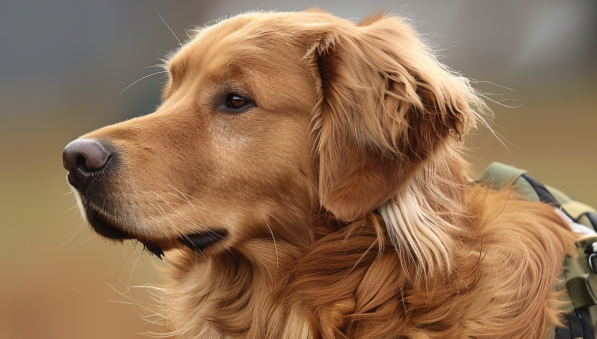
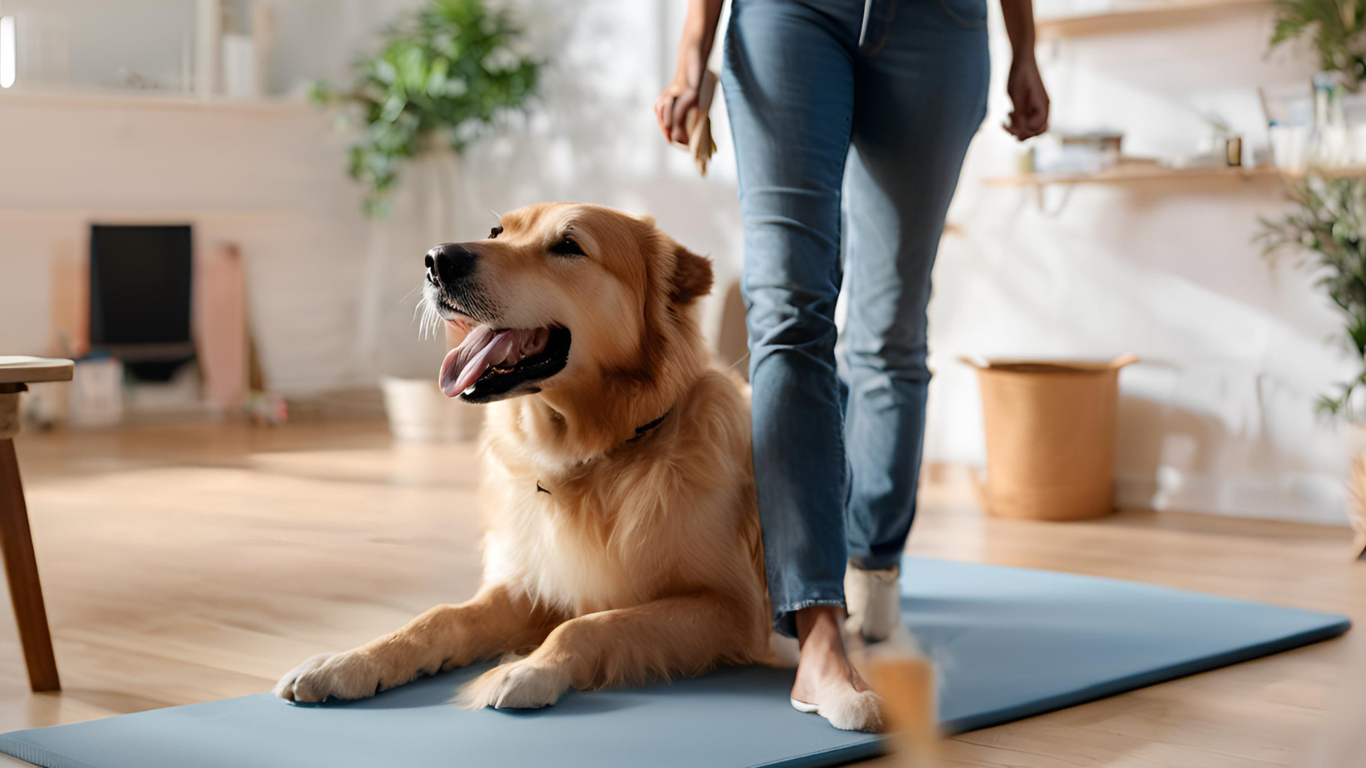
Picture a golden retriever named Max who loves hugs and meeting new people. His owners adore his friendly disposition but also want him to be more alert and protective when something’s actually off. That tension — wanting both a sweet family dog and a genuine deterrent — comes up constantly, and with the right approach, it’s absolutely possible to strike that balance.
Steps to Train Your Dog
1. Socialization
The foundation of any good guard dog is a well-socialized one. A dog that’s comfortable with neighbors, friends, other pets, and unfamiliar environments is actually better at distinguishing a real stranger-danger situation from ordinary daily life — not worse. Take your dog to different environments and let them meet a wide range of people.
How to socialize your dog:
- Puppy classes: structured socialization with other dogs and people in a controlled setting.
- Walks in varied areas: residential streets, parks, and busier pedestrian areas all expose your dog to different sights, sounds, and people.
- Meet a range of people: friends, family, and neighbors of different ages and appearances, so your dog learns that “different” doesn’t automatically mean “threatening.”
2. Basic Obedience
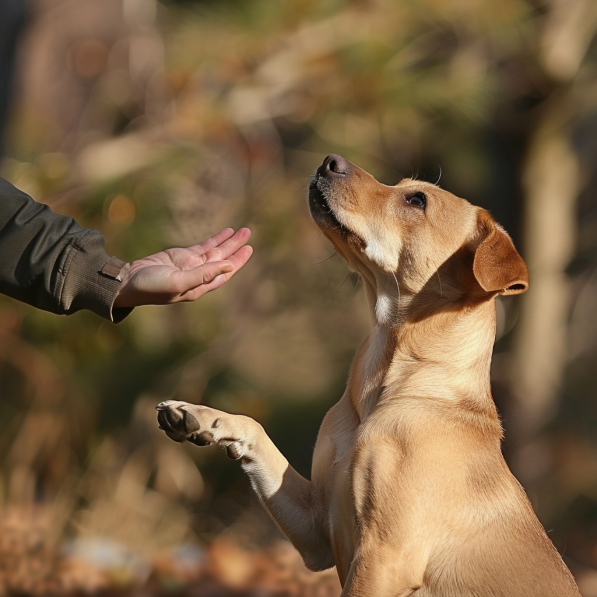
Everything else in this guide depends on a solid obedience foundation. Sit, stay, come, and heel aren’t just basic manners — they’re the communication channel you’ll rely on for every step that follows.
- Sit: usually the easiest command to start with and build early confidence.
- Stay: keeps your dog in place and under control, especially useful during greetings at the door.
- Come: a genuine safety net — a reliable recall matters far beyond guard training.
- Heel: makes walks calmer and more controlled, especially around unfamiliar people or dogs.
Tips for teaching these commands: keep sessions to 5-10 minutes to hold your dog’s attention, use the same words and gestures every time, and reward good behavior consistently with treats, praise, or play.
3. Controlled Alerting
This step teaches your dog to bark or show alertness on command, then stop on command — the “stop” half is just as important as the alert itself. When someone approaches your home, use a consistent command like “alert.” Reward one or two barks, then follow with a “quiet” command and reward the calm that follows.
- Alert command: a specific word or cue that signals your dog to bark.
- Reward and redirect: reward the alert bark, then cue “quiet” and reward the calm that follows — never let barking escalate unchecked.
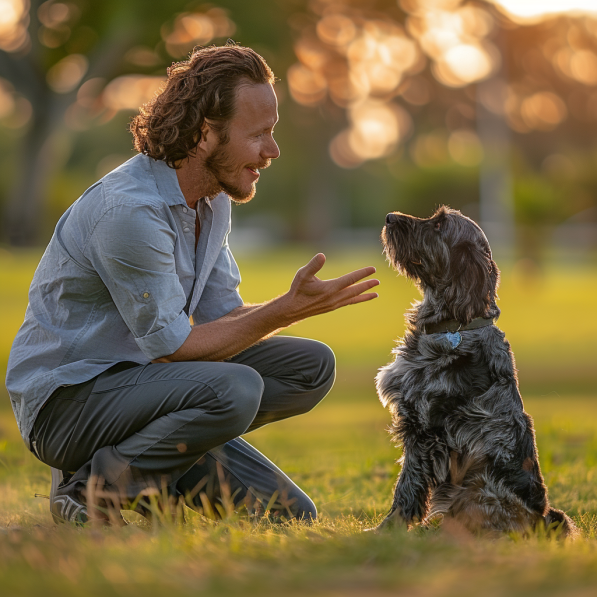
- Practice with helpers: have friends or family act as an approaching stranger so you can practice the full alert-then-quiet sequence in a controlled way.
4. The “Watch” or “Guard” Command
This teaches your dog to shift into an alert, attentive state on a specific cue, distinct from the bark-and-stop sequence above. Practice in a low-distraction setting first, with a friend playing the role of an approaching stranger, using a calm, firm voice for the command and rewarding correct responses.
- Start in a controlled environment with minimal distractions.
- Introduce the command firmly and consistently — “guard” or “watch” both work, as long as you’re consistent.
- Practice with role play, having a friend approach as a stranger while you cue the command and reward the correct response.
- Stay consistent with regular practice to reinforce the behavior over time.
An Important Safety Note
What this guide covers is alert and deterrent training — teaching your dog to notice, signal, and stay composed around unfamiliar situations. It is not bite work or attack training, which is a specialized discipline that carries real legal and safety liability and should only be pursued through a professional protection-dog program, not a DIY guide. Training a dog to bite or physically confront a person, even with good intentions, creates serious risk: to visitors, to your own family, and to you as the owner if something goes wrong. If you’re interested in that level of training specifically, see our separate guide on protection dog training, and strongly consider working with a certified professional rather than training it yourself.
Practical Tips for Successful Training
- Be consistent: train regularly, using the same commands and rewards every time.
- Be patient: dogs learn at their own pace — stay positive even when progress feels slow.
- Use positive reinforcement: reward good behavior with treats, affection, and play. Avoid punishment, which tends to produce a fearful or genuinely aggressive dog rather than a well-balanced protector.
- Get professional help if needed: a certified trainer can tailor this process to your specific dog, especially if progress stalls.
- Test in real scenarios: have friends or family act as strangers to see how your dog actually responds outside of a structured training session.
Frequently Asked Questions
Can any dog be trained as a guard dog?
Most dogs can learn basic alert behavior, but true guarding temperament (confidence, a naturally protective instinct, sound nerves under pressure) varies significantly by breed and individual dog. A naturally anxious or fearful dog isn’t a good candidate, since guard training on top of an anxious temperament can produce unpredictable reactivity rather than reliable protection.
Will guard dog training make my dog aggressive toward guests?
Not if it’s done correctly. The socialization step is what prevents this — a well-socialized dog learns to distinguish between a normal visitor and a genuinely unusual situation. Skipping socialization while focusing only on the alert and guard commands is what tends to produce an overly suspicious or reactive dog.
How long does guard dog training take?
Basic obedience typically takes 2-3 months of consistent practice. Layering in controlled alerting and the guard command on top of a solid obedience foundation usually adds another few months, depending on your dog’s age, temperament, and how consistently you practice.
Is guard dog training the same as protection dog training?
No, and this distinction matters. Guard dog training (what this guide covers) focuses on alerting and deterrence — a dog that barks, watches, and signals concern. Protection dog training goes further into controlled bite work and physical intervention, and is a specialized field that should only be pursued through a certified professional program.
Final Thoughts
Turning a friendly dog into a reliable guard dog comes down to three things: strong socialization so your dog can tell the difference between ordinary and unusual, a solid obedience foundation so you have real communication with your dog, and a clear, consistent alert-and-guard command sequence layered on top.
Done this way, you end up with a dog that’s genuinely protective when it matters and still the same friendly, affectionate companion the rest of the time. It takes real time and patience, but it’s absolutely achievable with consistency.